Sacos de dormir y colchonetas para dormir: Guía Completa para Elegir el Mejor Equipo de Descanso en tus Aventuras
Getting a good night’s sleep is one of the most important factors for enjoying any outdoor experience. Whether you’re camping, hiking, cycling, or simply enjoying a weekend getaway, having a good sleeping bag and sleeping mat can make all the difference between a comfortable night and a rough one. In this comprehensive guide, you’ll discover the types, features, materials, temperatures, and key tips for choosing the perfect sleeping gear.
1. Why is it important to choose the right sleeping bag and sleeping mat?
Getting enough rest directly impacts your physical performance, mood, energy, and confidence. Sleeping on the floor, even for just one night, can lead to:
- Cold during the early morning
- Backache
- Loss of body heat
- Poor circulation
- Lack of energy the next day
The sleeping bag protects you from the cold and maintains your body temperature, while the sleeping mat creates a barrier between your body and the ground, insulating you from moisture and improving comfort.
2. Types of sleeping bags
Today, there are several types of sleeping bags designed for different climates, activities, and personal preferences. Here are the most common ones:
a) Momia Bag
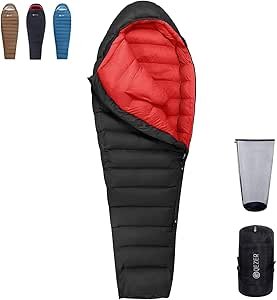
It’s the most popular choice for mountain activities and cold weather. Advantages:
- Better thermal insulation
- It fits the body
- Lightweight
- Ideal for low temperatures
b) Rectangular Sack
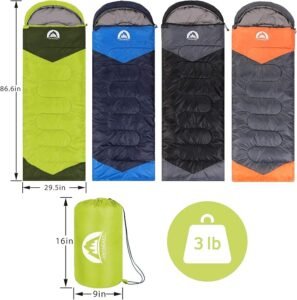
Perfect for family camping and warm weather. Advantages:
- Wider
- Greater comfort
- It can be fully opened and used as a blanket
c) Semi-rectangular bag (the hybrid)
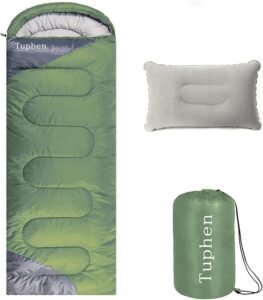
It combines the comfort of a rectangle with the thermal efficiency of a mummy. Advantages:
- Good comfort-to-heat ratio
- Versatile for different seasons
d) Double Sack
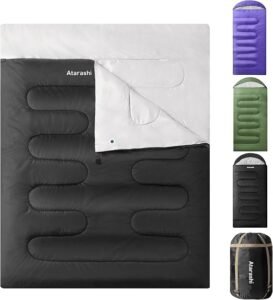
Ideal for couples or families. Advantages:
- Spacious
- Allows heat sharing
- Perfect for recreational camping
e) Ultralight Bag
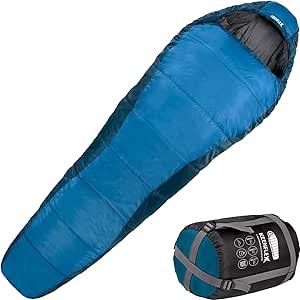
Designed for hikers or cyclists looking to minimize weight and bulk. Advantages:
- Very lightweight
- It takes up little space
- Suitable for 3 seasons
3. Fillings: Down vs. Synthetic Fiber
One of the most important parts of the bag is its filling. There are two main types:
Natural feather
- Excellent insulation
- Longer duration
- It compresses more
- More expensive
- It loses performance if it gets wet
Ideal for mountain and dry climate.
Synthetic fiber
- Improved performance in humid conditions
- More economical
- Easy to wash
- A little more bulky
Ideal for camping, humid climates and frequent use.
4. Bag temperatures: What do they mean?
Sleeping bags usually come with three values:
- Comfort temperature: the minimum temperature at which an average person sleeps comfortably.
- Temperature limit: how far it can keep you warm without losing comfort.
- Extreme temperature: survival value (not recommended for sleeping).
To choose yours:
- Summer → +10°C to +20°C
- 3 seasons → 0°C to +10°C
- Winter → -10°C to 0°C
- High mountain → -10°C to -30°C
5. Types of sleeping mats
The sleeping mat is just as important as the sleeping bag. These are the main options:
a) Foam (EVA) mat
The most classic ones. Advantages:
- Very resistant
- Lightweight
- Cockroaches
- They don’t get punctured
Perfect for trekking and heavy use.
b) Self-inflating mattress
It partially inflates when the valve is opened. Advantages:
- Comfortable
- Good insulation
- Easy to use
Ideal for camping and backpacking.
c) Inflatable mattress
Very comfortable and compact. Advantages:
- Maximum comfort
- Lightweight
- They take up little space
Perfect for travel, hiking and cycling.
d) Ultralight mattress
Designed to minimize weight. Advantages:
- Extremely lightweight
- Easy to transport
Perfect for long, minimalist adventures.
6. The R-Value index: the actual insulation of a mattress
The R-value measures how much heat it prevents from escaping to the ground. The higher the value, the better the insulation.
- Summer: R-Value 1 – 2
- 3 stations: R-Value 2 – 4
- Winter: R-Value 4 – 6
- High mountain: R-Value 6+
If you are camping in cold areas, choose the highest possible value.
7. How to combine your sleeping bag and sleeping mat for a better night’s sleep
The perfect combination depends on the weather:
Warm weather
- Lightweight sleeping bag + thin foam or inflatable mattress
Temperate climate
- 3-season sleeping bag + self-inflating sleeping mat
Cold weather
- Mummy sleeping bag + sleeping mat with R-Value 4 or higher
High mountain
- Down bag -10°C minimum
- Double-layer mattress or with R-Value 6+
8. Practical tips for choosing your equipment
✔Always choose your sleeping bag according to the actual minimum temperature of the location. If you’re traveling by motorcycle or bicycle, opt for compact models. For family camping, prioritize comfort over weight. Try the sleeping bag before buying it, if possible. Check that the zipper has an anti-jam system. Avoid overly thin sleeping mats if there are rocks or roots. Always protect the sleeping mat with a cover if using it on hard ground.
9. Equipment maintenance and care
To extend the lifespan:
Sleeping bag
- Air it out after each use
- Save it uncompressed
- Wash only when necessary
Pad
- Clean it with mild soap and water.
- Store it slightly inflated.
- Avoid contact with sharp objects
Related publications:Routes for traveling with friends
Related publications: What to pack for a camping trip
Conclusion
Choosing the right sleeping bag and sleeping pad is essential for ensuring comfortable and safe nights during your outdoor adventures. Whether you’re a casual camper, a seasoned hiker, or a passionate traveler, good sleep gear will make a world of difference to your experience.



3 comentarios
does doxycycline cover pseudomonas · 5 de enero de 2026 a las 11:23
I am sure this article has touched all the internet people, its really really fastidious piece of writing on building up new weblog.
tadalafil drug class · 8 de enero de 2026 a las 02:45
Ahaa, its good dialogue about this piece of writing here at this website, I have read all that, so at this time me also commenting here.
furosemide spironolactone ratio · 10 de enero de 2026 a las 12:21
These are genuinely fantastic ideas in regarding blogging. You have touched some pleasant points here. Any way keep up wrinting.